Most organizations today say they want a digital thread. Fewer agree on what it actually is. And even fewer have one that functions beyond slideware
Across industries from aerospace and defense to semiconductor and medical devices the push toward lifecycle traceability is accelerating. Teams want to connect requirements, design, verification, engineering change, quality, supply chain, and service data and other types of data. They want real-time insights, AI-ready data, and end-to-end continuity.
But before talking about how to build a digital thread, we need to talk about the terms that are often confused with it.
Digital, Digitalized, and Digital Thread: not the same thing
Organizations often use these words interchangeably, but they represent entirely different stages of maturity.
1. Digital
This is the simplest step: converting paper or static documents into digital formats. PDFs instead of binders. Word docs instead of printed specifications.
Useful, yes. But nothing is connected. It doesn’t improve visibility or collaboration.
2. Digitalized
Digitalization moves beyond documents. It means connecting information across systems PLM, ALM, DevOps, ERP, etc.
Data begins to flow cross-functionally and teams work with fewer silos.
However, these connections are typically point-to-point fragile links that break easily, don’t scale, and lack lifecycle continuity.
3. Digital Thread
The digital thread is the end state – a continuously connected and traceable flow of information across the entire lifecycle:
Requirements, Design, Verification & validation, Bill of materials, Software & hardware changes, Manufacturing data, Quality events, Compliance artifacts etc.
Every decision, change, and outcome is connected across tools, across teams, and across time.
This continuity is what enables:
- Faster engineering cycles
- Reliable compliance reporting
- Cross-domain collaboration
- Audit-ready traceability
- AI that actually works, because the data feeding it is connected and contextual
Understanding the distinction between these three stages is essential. Many organizations think they’re building a digital thread, when in reality they are still in the digitalized stage.
Why do Digital Thread initiatives struggle?
Data Silos and Fragmentation
Legacy systems often create isolated data silos across different departments, each using its own formats, naming conventions, and standards. This fragmented approach makes collaboration difficult, as critical information becomes inaccessible to teams that need it most.
Vendor Lock-In
Relying on proprietary systems traps businesses in a cycle of dependency that stifles innovation and limits flexibility. Vendor lock-in means fewer options, rising costs, and little room for negotiation as you become tied to a single provider.
Scalability and Data Continuity
As organizations undergo digital transformation, the demand on infrastructure increases, often stretching systems to their limits. Poorly managed data synchronization—especially when it lacks richness like hierarchical data or links can disrupt workflows and slow decision-making.
Three Architectural approaches to Digital Thread and their tradeoffs
Nearly every digital-thread implementation falls into one of these buckets. Understanding them helps organizations make informed decisions.
UI-Level Integrations (Virtual Thread)
This approach installs plugins into each tool, allowing users to view information from other systems.
Pros:
- Lightweight
- Does not duplicate data
Limitations:
- Often read-only No true cross-system traceability
- Dependent on tools supporting plugins
- No aggregated reporting
- If one system is down, visibility breaks
This approach creates visibility, not a digital thread.
Centralized External Digital Thread
Here, all data is replicated into a separate, central platform that tries to represent the entire lifecycle.
Pros:
- Strong unified lifecycle view
- Centralized reporting
Limitations:
- Users must learn a new interface
- High adoption barriers
- Becomes a single point of failure
- Must support many formats (HTML, Wiki, OLE objects, etc.)
- Requires significant maintenance as tools evolve
This model can work only if the organization is ready for a large, long-term program.
Federated Digital Thread (Most Scalable Approach)
In a federated model, systems remain authoritative for their own data. A federated layer connects tools, enabling contextual information to flow without copying everything into a third system.
Pros:
- No retraining users stay in the tools they already know
- No change in workflow
- High data quality
- Rich traceability
- Resilient if one tool is down, others keep working
- Governs data at its source
- AI-ready, because context is preserved
This approach aligns with how most engineering organizations actually operate: distributed, heterogeneous, and evolving.
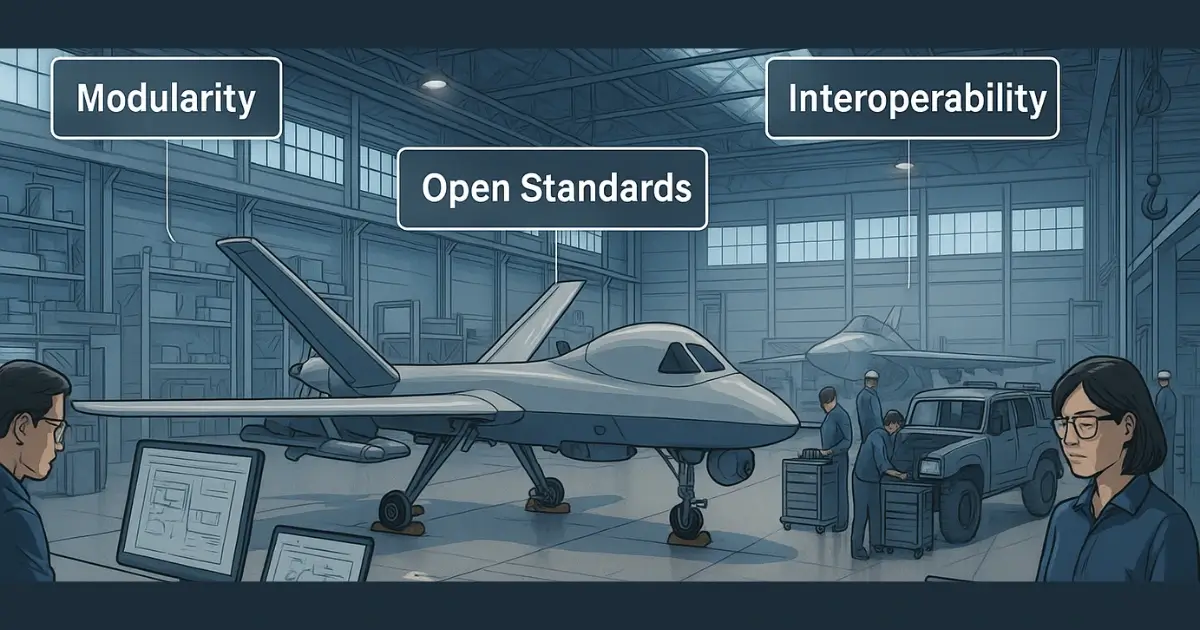
Best Practices for designing a Digital Thread that lasts
Digital Thread as the foundation for AI
A digital thread is not just about traceability. It’s the backbone of AI for product development.
Without connected lifecycle data:
- AI cannot understand context
- Models hallucinate
- Decisions lack traceability
- Insights become unreliable
A strong digital thread feeds AI the structured, contextual, linked information it needs to produce outcomes you can trust.
Final thoughts
A successful digital thread isn’t about adding new tools – it’s about connecting the ones teams already rely on. The federated approach has emerged as the most practical and sustainable way to achieve this: preserving system-of-record governance, reducing adoption barriers, and enabling clean, contextual data to flow across the lifecycle.
Solutions like OpsHub help organizations build this kind of federated digital thread linking PLM, ALM, DevOps, quality, and manufacturing systems without forcing users to change how they work.
To explore how federated digital threads can transform your product lifecycle
Learn more