Did you know that 83% data migration projects fail or exceed the timing and budget? The main reason for this high failure rate is the lack of an effective cloud migration strategy. Moving your data, applications, and processes to a cloud is important, but doing it correctly is what matters more. This brief guide explores the different types of migration strategies so you can choose the best fit for your enterprise.
Understanding the Basics of Cloud Data Migration
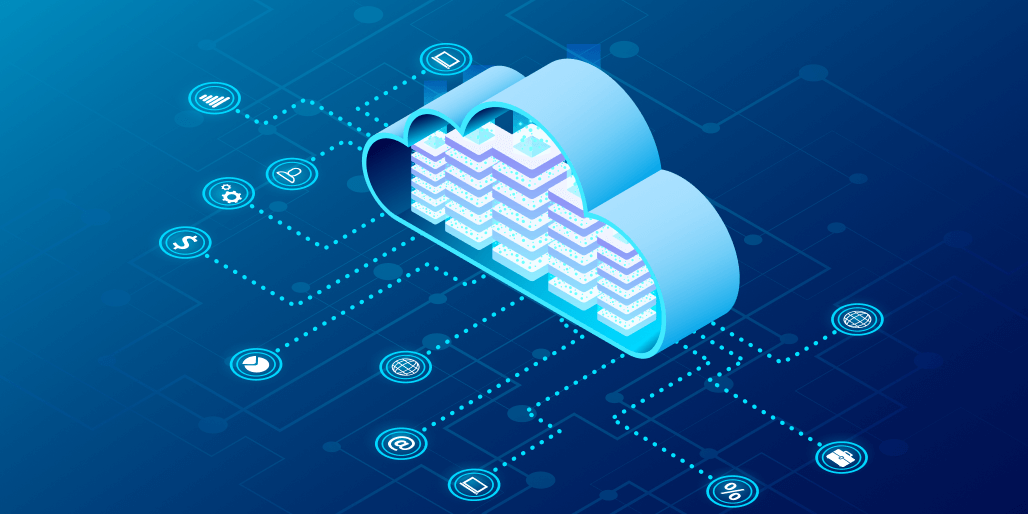
Cloud data migration involves the shifting of data, work processes, and applications from on premise systems to cloud-based infrastructures. It has become a strategic imperative for enterprises seeking to improve efficiency, reduce costs, and boost agility.
The key challenge in adopting cloud-based platforms is the transfer of data to the cloud. Lack of expertise and the absence of a results-driven strategy are costly mistakes that may lead to disruption and loss of data during the migration process. Therefore, it is imperative to understand the various migration strategies and cloud data migration solutions to opt for the right one.
Primarily there are two approaches to migration- cold and live data migration. Let’s read ahead to learn better about the pros and cons of each approach.
Cold Data Migration
Cold data migration, or traditional data migration is an approach which involves the transfer of data from one application to another in a time-inducive manner. It involves a complete shutdown of the system when transferring data to a new one.
No changes can be made to the source data till the migration process is complete. Users only regain access only after validation and sign-off, when they have finally transitioned to the new system. In most cases, cold migration is simply a clone of the data being transferred without any changes to structure or form.
This strategy is fruitful only for infrequently accessed data that can be turned off with minimal impact to the business. While it can be a cost-efficient practice, the delays incurred make it counter-productive for active data and processes.
Live Data Migration
OpsHub’s live data migration is a process where the data transfer occurs without shutting down systems. This means that there is no downtime, and enterprises have access to data during the migration process.
Zero downtime is great, but downtime alone doesn’t address the bigger picture. As migration progresses, teams and data in the old and new systems can start to drift apart, leading to disruption in collaboration, reporting, and traceability.
Teams working on the old system and the new system often end up operating in silos, with no unified view of data.
It does not address the deeper challenges of aggregate compliance reporting, and collaboration needs between teams moved to new system and teams still using legacy system, especially when:
As a result, when reports are generated, they may draw from partial, outdated, or incomplete datasets—leading to inaccurate reporting and worse, a misinformed leadership team.
OpsHub’s Live++ Data Migration: A transformative, non-disruptive approach to data migration
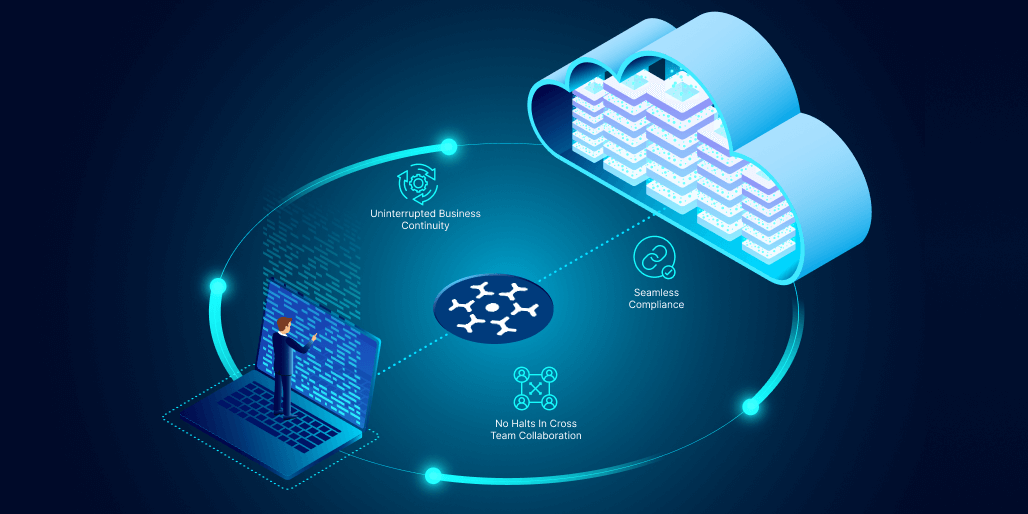
Live++ is an advanced approach to application data migration, engineered to address the unique challenges of enterprise-grade migrations. It ensures continuous, real-time data alignment between old and new systems throughout the migration process, ensuring that data remains accessible and accurate in both environments.
At the heart of Live++ is its Reverse-Sync capability, a feature that no traditional migration platform offers. Reverse Sync creates a continuous feedback loop, syncing changes from the new system back to the old in real time. Teams working on the old system can enjoy uninterrupted access to data and updates being made in the new system. This guarantees that every update is captured across both systems, maintaining a single source of truth critical for decision-making, collaboration, and compliance.
What makes Live++ stand apart from any other data migration approach in the market currently:
Choosing the Right Migration Strategy for Your Business
Each migration strategy has its pros and cons. Selecting the one for your enterprise will depend on factors like:
Business Continuity and Downtime Tolerance
Data Volume and Complexity
Compliance and Audit Requirements
Migration Timeframe and Scalability
Post-Migration Usability
When to choose Live or Live++ Data Migration
OpsHub understands that every enterprise has unique needs when it comes to data migration. That’s why we offer two robust options:
Live Migration:
Live migration is an excellent solution for migration projects where:
Live++ Data Migration:
However, for large-scale modernization projects, compliance-heavy industries, or highly interconnected enterprise environments, Live++ is indispensable when teams need:
1. Continuous Data Access Without Compromise
2. Compliance is Non-Negotiable
The OpsHub Advantage
With OpsHub, you’re not choosing between two migration approaches-you’re choosing the approach that best aligns with your business needs:
Conclusion
For forward-looking enterprises, cloud migration is a necessity. However, leaping into technology without adequate knowledge can be counter productive. Therefore, an understanding of the migration process and its requirements is key to choosing a beneficial cloud migration strategy. After all, the strategy you pick has the power to revolutionize your business and enable digital transformation for your enterprise.