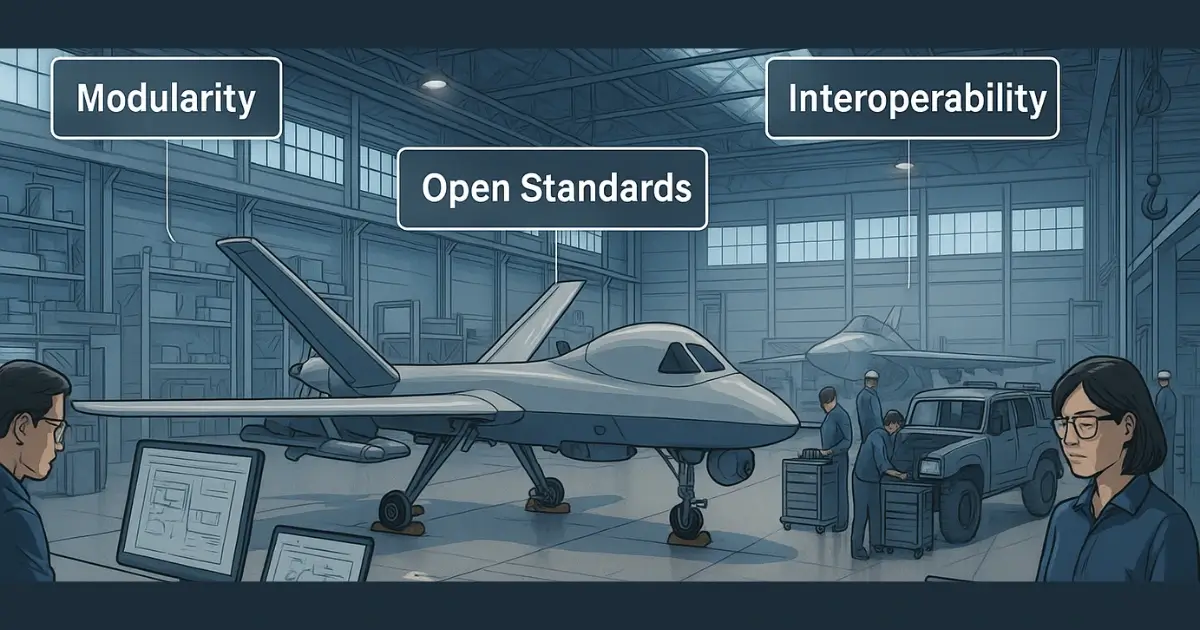
The Coming Divide in Defense: Federation or Fallout Under DoDI 5000.97
Share: The defense industry is entering a pivotal phase of transformation. With the release of DoDI 5000.97, the U.S. Department of Defense (DoD) has made

No-code integration platform for rich bi-directional sync

Zero downtime migration to tool of your choice
Keep Historical Data, Without Slowing Down Your Tools

Migrate or restructure Azure DevOps

Real-time, context-rich data lake for AI or analytics
By Role
Accelerate delivery with clear insights

Accelerate delivery with clear insights

Transform smarter with a connected digital thread

Confident transitions for every enterprise change
By Initiative

Operational readiness through connected engineering

Modernize and move to cloud without disruption

Build a compliant digital thread for complex environments

Build the foundation for smarter AI
By Domain

No-code integration across teams and systems

Enable collaboration between IT, support, and business teams

Connect PLM & engineering teams for smarter products

Ensure regulatory compliance from start to release

Explore the latest in technology best practices

Success stories from the field
Actionable insights for your business challenges.

See solutions in action

Learn, plan, and execute with confidence

Official announcements and updates
Join discussions that drive results
Stay ahead with curated insights

Share: The defense industry is entering a pivotal phase of transformation. With the release of DoDI 5000.97, the U.S. Department of Defense (DoD) has made
In the fast-paced and highly regulated healthcare industry, seamless communication and traceability across the product lifecycle aren’t just operational goals—they’re critical for saving lives and ensuring compliance. Yet, many organizations rely on fragmented systems that hinder collaboration, create inefficiencies, and jeopardize patient safety.
A study by Deloitte reveals that over 70% of healthcare organizations struggle with siloed data, leading to slower product deliveries, and increased regulatory risks. Without a unified Product Lifecycle Management (PLM) system, critical data—ranging from design specifications to compliance records—remains trapped in disconnected tools.
Moreover, fragmented systems compromise traceability, a cornerstone of compliance in the healthcare industry. According to the FDA, inadequate traceability is a leading cause of medical device recalls, which not only tarnishes reputations but also puts patient lives at risk.
At its core, the problem is clear: siloed data and disjointed workflows hinder the industry’s ability to innovate, comply, and deliver life-saving medical devices to market efficiently. If left unaddressed, these inefficiencies will only widen the gap between patient needs and organizational capabilities.
In the healthcare and medical device industry, a fragmented Product Lifecycle Management (PLM) environment isn’t just inefficient—it’s dangerous. Without a digital thread to unify data, processes, and systems, organizations face mounting risks that can hinder innovation, compliance, and operational excellence.
Let’s explore the consequences of inaction:
Imagine a seamless flow of information connecting every phase of your product’s journey—from initial design to manufacturing, testing, and beyond. That’s the power of a digital thread: an invisible yet indispensable link that ties together all the data, processes, and systems in your product’s lifecycle.
For healthcare enterprises, a robust digital thread isn’t just a luxury; it’s a game-changer. It empowers you to accelerate innovation, ensure compliance, and deliver life-saving products to market with precision and confidence.
Because when lives are on the line, clarity and connection aren’t optional—they’re essential.
OpsHub Integration Manager is the industry’s leading choice for establishing a seamless digital thread. By integrating disparate tools, processes, and teams into one unified ecosystem, OIM ensures that data flows freely across the entire product lifecycle—from initial R&D to manufacturing, testing, and post-market monitoring.
Here’s how OIM helps build a digital thread
No Vendor Lock-in
OIM provides seamless connectivity with 60+ tools, including ALM, PLM, CAD, and more, allowing businesses to choose and switch tools freely, adapt to changing needs, and avoid dependence on any single vendor.
Get Unmatched Scalability
Supporting both on-premises and cloud deployments, OIM aligns seamlessly with a business’s infrastructure and security needs. It also scales with business requirements and can parallelly sync 1000s of projects without slowing end systems.
Enjoy Rich, 100% Accurate Data
OIM’s ability to preserve historical data helps the team to get a complete view of the project, even when switching tools or systems. It retains links, comments, attachments, in-line content, and any past changes allowing them to work seamlessly without losing context.
Ensure Fail-safe compliance
OpsHub Integration Manager ensures fail-safe compliance by keeping data accurate and consistent across systems. With real-time sync and error-handling, it maintains up-to-date audit trails and traceability, reducing compliance risks.
Configure and Manage with Ease
The software is designed for ease of configuration and use, catering to both technical and non-technical users. It provides an interface for monitoring integration progress, complemented by pre-built connectors and drag-and-drop mapping capabilities.
A leading medical device manufacturer specializing in innovative cardiovascular implants faced significant hurdles due to disconnected systems and siloed data across their Product Lifecycle Management (PLM) ecosystem.
The team faced key challenges like:
To address these challenges, the company chose OpsHub Integration Manager (OIM) to build a unified digital thread across their PLM ecosystem.
OIM seamlessly integrated tools like PTC Windchill, IBM DOORS, and Salesforce, and many others, creating a connected infrastructure that bridged data silos and streamlined workflows.
Here’s how OIM transformed their operations:
End-to-End Traceability
Integration enabled seamless updates across tools: design changes in Windchill are synced instantly for manufacturing, while regulatory documentation was linked directly to requirements in DOORS. Post-market feedback from Salesforce traced issues back to Windchill, improving future designs.
Efficient Change Management
Teams worked natively on change requests, with automated impact analysis flagging production changes affecting design, testing, or compliance. Real-time notifications ensured timely approvals, minimizing delays.
Streamlined Compliance and Audit Readiness
OIM centralized compliance tracking and enabled on-demand traceability reports, simplifying audits and ensuring accuracy.
Faster production timelines through real-time system synchronization.
Reduction in audit prep time with automated reports and centralized data.
Lower rework costs by addressing changes pre-production.
The healthcare and medical device industry is at a turning point.
Stricter regulations from the FDA, MDR, and HIPAA demand flawless compliance and traceability. Falling short risks fines, penalties, and lost trust.
Meanwhile, the race to deliver safer, innovative therapies faster is intensifying. But disconnected systems and siloed data can’t keep up.
Digital transformation isn’t just an advantage—it’s survival. Non-compliance costs exceed $14M, making the delay a costly mistake.
Ready to see how OIM can transform your healthcare enterprise? Let’s start a conversation.
Experience seamless integration & eliminate data silos with OIM
Suhana works as an Associate Marketing Executive at OpsHub. She enjoys creating innovative content and social media strategies for tech-driven businesses, blending creativity with communication to fuel growth and build impactful connections.