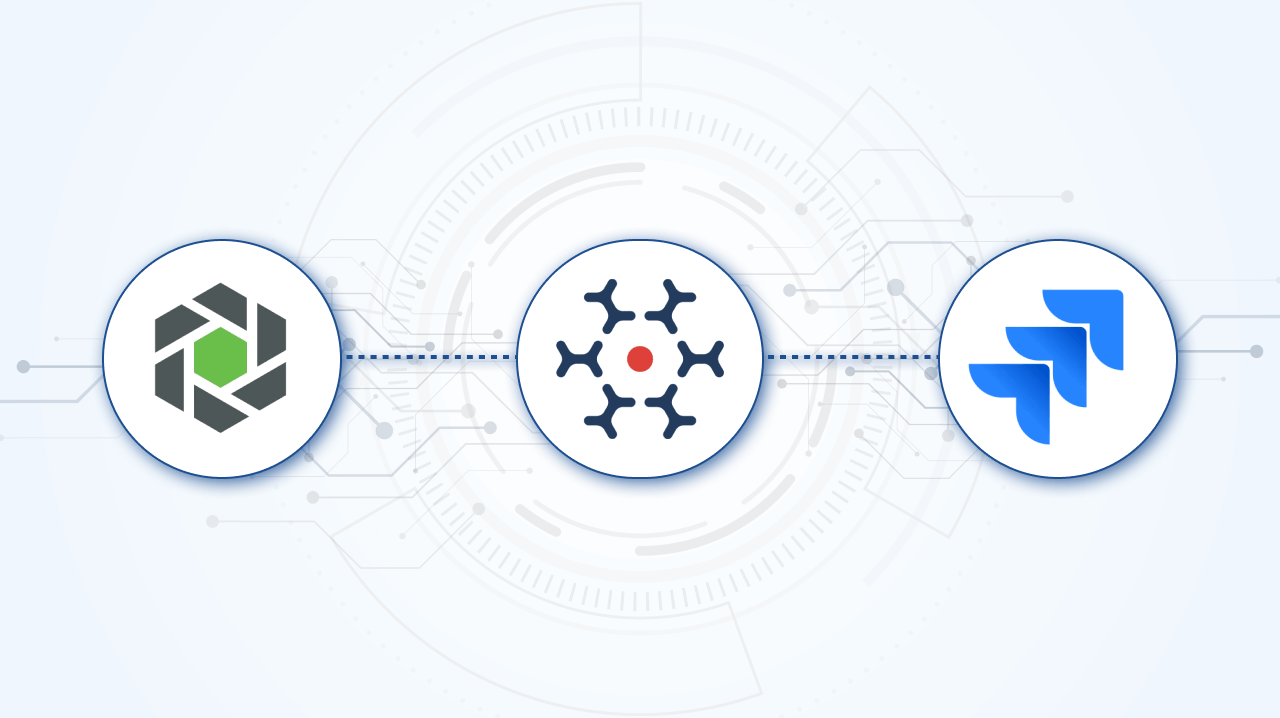
Azure DevOps (Both Azure DevOps Server and Services, also known as TFS and VSTS) is used by several enterprises to manage their development work whereas OpenText ALM (Formerly Known as Micro Focus ALM) is extensively used for its quality control module. Integrating these two systems can, therefore, help remove the visibility ‘black hole’ between the development and the quality control teams; thereby, eliminating the possibilities of miscommunication, delayed communication, or exchange of incorrect/outdated data. OpenText ALM with Azure DevOps (Both Azure DevOps Server and Services, also known as TFS and VSTS) further ensures that both teams have complete visibility into each other’s tasks in real-time and they are on the same page regarding delivery timelines & quality parameters.
Benefits of integrating OpenText ALM and Azure DevOps:
- Access to QA plans and defects in real-time
- Real-time updates on the status of a story, its estimated time of delivery, and any risks that might delay the impending release
- Complete context of the customer requirement and visibility into codes written by the development team & test cases written by QA team
- Coordinate on the delivery timelines seamlessly with concurrent updates on changes
Let us look at a potential real-life scenario to understand how OpenText ALM and Azure DevOps integration can help teams in an enterprise work efficiently.
The product manager, based on his/her communication with the customer, creates a ‘User Story’ with descriptions and delivery timeline in Azure DevOps(Both Azure DevOps Server and Services, also known as TFS and VSTS). The development team also using Azure DevOps breaks down the ‘User Story’ into multiple ‘Tasks’ and develops an elaborate plan with timelines, effort hours, and assignees for each task. The ‘User Story’ also synchronizes to OpenText ALM, which is being used by the quality control team. The quality control team, therefore, simultaneously starts writing a test case for the given ‘User Story’.
At this given scenario, if there is a change in the ‘User Story’ due to reasons such as customer adding new features or a change in the delivery timeline due to change of business priorities at the customer end, an update made to the ‘User Story’ will simultaneously be seen by development team users as well as by quality control team users. Synchronization of this information in both systems in real-time will help the teams not only hold & re-prioritize their tasks, but also get a context of the business scenario at the customer’s end.
Now, imagine, both teams take care of the new request and new delivery timelines in their updated plans and the development team completes work on the ‘tasks’ according to the updated timelines. After completion of all the ‘tasks’, the development team closes the ‘User Story’ at their end. The status change for the ‘User Story’ also reflects in OpenText ALM and then the quality control team knows that they can run the test case as per their schedule.
If the integration is configured bi-directionally between OpenText ALM and Azure DevOps, the status of the test result from OpenText ALM can also be synchronized to the ‘User Story’ in Azure DevOps giving the Product Manager as well as the development a real-time visibility into completion of their tasks.
OpsHub Integration Manager supports the integration of multiple OpenText ALM versions and all versions of Azure DevOps (Both Azure DevOps Server and Services, also known as TFS and VSTS). The popularly synchronized entities between these two systems are:
The seamless bi-directional integration between these systems helps teams in saving time as they do not have to manually feed in data in multiple systems or worry about data discrepancies. As access to the business requirements, development status, and associated updates as well as quality parameters, Quality Assurance (QA) schedule, test cases, and test results are available to all the relevant stakeholders in the enterprise at any given time, it also becomes easier for them to take independent as well as collective decisions.