OpsHub Integration Manager

No-code integration platform for rich bi-directional sync

OpsHub Migration Manager

Zero downtime migration to tool of your choice
OpsHub Archive Manager

Keep Historical Data, Without Slowing Down Your Tools

OpsHub Migrator for Microsoft Azure DevOps

Migrate or restructure Azure DevOps

OpsHub Data Bridge

Real-time, context-rich data lake for AI or analytics

Discover our story, vision, and impact.

By Domain

Software Development & Agile Engineering

No-code integration across teams and systems

IT Service Management & Customer Support

Enable collaboration between IT, support, and business teams

Product Lifecycle Management & Systems Engineering

Connect PLM & engineering teams for smarter products

Requirements Management for Regulated Industries

Ensure regulatory compliance from start to release

Blogs

Explore the latest in technology best practices

Case Studies

Success stories from the field

White Papers

Actionable insights for your business challenges.

Videos

See solutions in action

EBooks

Learn, plan, and execute with confidence

Press Releases

Official announcements and updates

Webinars

Join discussions that drive results

News Letters

Stay ahead with curated insights

Migration is Hard, OpsHub Makes it Easier

This blog briefly discusses the challenges involved in data migration, & how OpsHub migration solution makes it easier to switch from one tool to another.

In this fast-paced, digitally enabled world, enterprises need to modernize their value stream toolchain to be more productive, efficient, and competitive. However, transitioning from one tool to another requires meticulous planning, yet it causes a lot of disruptions. For business continuity and compliance reasons, enterprises need to ensure that all the data is either migrated to the new tool or kept in a way that is accessible to teams that need it. Data migration, therefore, becomes one of the major challenges in creating a modern, agile product development ecosystem. It also underpins the success of many strategic initiatives – systems modernization, implementation of new packages, system consolidation following a merger or acquisition.

This blog briefly discusses the need for data migration, challenges involved in data migration, and how OpsHub makes migration easie

Challenges of Data Migration

Enterprises across the globe spend billions of dollars to migrate their all-important data between business applications that are critical part of the value stream toolchain. In the digital transformation journey of an enterprise, one of the key decision points is tool modernization, and migration is often a difficult proposition. Some of the common challenges that enterprises face when it comes to data migration are as follows:

Extended system downtime that makes migration expensive:

With the high volume of data that any organization processes these days, it shouldn’t be astonishing if the time estimated for migration runs into a few weeks or even months. Locking users out of the system while the migration takes place, therefore, becomes an expensive (and impossible) proposition for any business.

Data loss:

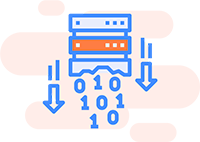
Due to regulatory and compliance needs, it is crucial that all the data must be migrated, and there is nothing left behind. Since the source and target systems are different, sometimes complete migration is not possible, and enterprises may need to retain the legacy systems for audit purposes, or the other option is to leave some information behind.

Failures:

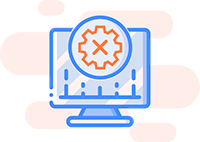
Data migration process requires a careful planning and risk assessment. However, due to the complexity of migration planning and heterogeneous nature of the source and target systems often lead to failures. In most cases, the only option is to restart a migration, making it difficult to predict the timeline of migration with a risk of increased downtime.
Large-scale migration:

In most cases, migration is a complex process. The process of planning, migration, validation, and terminating the source system is iterative for every tool/project. It becomes a much bigger problem when there are thousands of projects in the source system that may have dependency. That makes modularizing the migration impossible and even more complicated.

Data corruption:

In the case of highly complex migration involving thousands of projects, the only way to ensure that data is correctly migrated and completely cut-off the older system is to manually verify it. There is no recourse if wrong or missing data is detected after the older system is decommissioned.

An Unsuccessful or Delayed Migration Could Lead to:

OpsHub Makes Migration Easier

OpsHub provides a robust platform designed to address the complex challenges of data migration. The key benefits of using the OpsHub Tools to migrate from one system to another are as follows:

Zero system downtime during migration

OpsHub Migration Manager (OMM) provides a zero-downtime migration option wherein teams can continue to use the current system while the migration is ongoing. That allows enterprises to plan the migration in a phased manner and train the teams accordingly to switch them to a more agile tool


History for all migrated data

OMM supports migration of all the artifacts with entire history, comments, attachments, and relationships. That ensures a complete migration to a more modern tool of choice without the need to keep the older system for reference. It is specifically important for enterprises where regulatory compliance drives a lot of decisions.

Robust recovery and reconciliation mechanism

OMM offers a sound recovery and reconciliation mechanism that prevents data loss and allows for migration to restart from any intermediate point. In case of an error or a change in requirement, the migration doesn’t need to restart from beginning.

Highly scalable with a factory approach

OMM provides a factory approach to migration, where once the configuration to migrate a project is completed and validated, it can be reused to migrate thousands of project without needing to repeat everything for all the projects. That is especially useful in large scale migration projects involving several projects/teams.

High data fidelity post-migration

OMM can bridge the gap of model mismatch between the source and the target systems, and there is no data loss post migration. That is extremely important for enterprises concerned with regulatory compliance. OMM ensures that all the desired data is migrated with the right context and relationships..

Conclusion

Migration is one of the key roadblocks in adopting modern tools that meet the needs of digital transformation. Enterprises often have to make a compromise between data fidelity or cost of migration, and even then, they need to retain the legacy system for regulatory compliance. OpsHub Solutions allow enterprises to perform a full-fidelity migration with zero-downtime and provides the flexibility to plan the migration in a phased manner. OpsHub team has experience in migrating thousands of projects and millions of work-items with complete history, attachments, comments, and associations, making it easier for enterprises to do away with the legacy systems completely and transition teams to a more modern tool without any disruption/downtime.

Table of Contents

Contact Us

Connect with an OpsHub Expert

Schedule a free planning consultation session with our migration experts.

Experience scalable, non-disruptive migration with OMM

Schedule a free 30-minute live demo with our migration experts.