Modern product development needs alignment between the cross-functional teams in an enterprise. The primary driving forces behind this advancement is the unprecedented complexity of the products that are to be developed and increased customer expectations. Modern systems engineering approach increases the collaboration and productivity across the product delivery chain and reduces the risks of delayed deliveries or delivery of a faulty product to the customer. For example, when requirements from Jama Connect are dynamically integrated with other systems in the systems engineering ecosystem – the collaboration between all teams and traceability of data within the ecosystem effectively increases. With improved collaboration and visibility, enterprises can predict volatility in time and take preventive actions to mitigate potential risk.
In this blog, we will discuss why modernizing systems engineering is inevitable in the current times, the challenges in adopting modern system management, and how Jama Connect along with OpsHub Migration Manager can help enterprises overcome these challenges.
Why adoption of modern systems engineering is critical now
Changing work-tree inside the enterprises
In any large-scale organization today, multiple geo-distributed teams work towards delivering a single product. While all these teams have specific tasks to complete, different timelines and priorities, all their decisions must be taken in context of the ultimate business goal. In addition to this challenge, enterprises are also expected to deliver quality products with smaller budgets, fewer resources, and shorter schedules. Accelerating the delivery cycle with these limitations and with legacy systems increases the risks of failure.
Demand for more sophisticated products
Considering how the influx of new technologies has increased the opportunity to create more sophisticated products aimed at better problem solving, product development process will only become complex going forward. In industries such aerospace and defense, automotive, medical device, and semiconductor engineering, where enterprise can’t afford to lose the control at any point during the product delivery process, maintaining alignment between business and engineering while using legacy systems, with limited management functionalities, would become a huge challenge.
Modernizing requirements management can be the game changer
Communication gaps within the enterprise, unclear/vague requirements are the main reasons for conflicts, delays, and financial loss in any enterprise. Therefore, switching to a modern requirement management system and bringing in transparent processes around requirements management have a potential to bring the desired change as compared to any other improvement across the product delivery chain.
A report by Project Management Institute in 2014 states that “When companies cite poor communication as the cause of project failure, 75 percent of the time it’s due to inadequate requirements management. Result: 47 percent of unsuccessful projects fail to meet goals due to poor requirements management.” (PMI, August 2014)
Many enterprises, both large and small, in the last two decades turned to various legacy tools for requirement management. However, with changing needs of the customers and increasing complexity in the kind of products that are being created, enterprises have now started feeling the need for a more modern & efficient requirement management system.
Industry leaders are pushing enterprises to adopt modernized systems to meet their new needs and keep up with the increasing market speed and volatility like never before.
And therefore, the adoption of Jama Connect for requirement management looks like the most logical move now. With Jama Connect, the systems engineering ecosystem becomes highly collaborative – with live data shared and accessible to all teams always irrespective of the geographical boundaries. As it becomes easier to coordinate across functions and teams, the teams have a clearer understanding of customer needs and they work together towards the common goal.
With Jama Connect, teams within an enterprise can deconstruct documents into actionable items. Teams can also use share, exchange, and reuse work items with all related comments and attachments. Teams can share specific work components with other teams for review, validation, and approval, without sharing the complete item with another team to maintain security/access controls. Users can also compare two versions of the same requirement side by side and clearly point out what has changed.
Other advanced features such as Real-time collaboration, Relationship rules, Test & Requirements alignment, Impact analysis, and Stream discussion also help enterprises create a more collaborative, efficient, scalable, and effective application delivery ecosystem.
The challenges in adopting modern systems engineering
The key challenge, however, lies in the adoption of the modernized systems such as Jama Connect in the already existing and complex product delivery toolchain.
Bringing a new system at the core of the existing system engineering ecosystem is challenging in multiple ways. Some of the core challenges are:
- Risks involved in migrating the critical data stored in the legacy system
- Reluctance from some stakeholders to move to a new system
- Integration of the new system with other functional systems in the enterprise
- Cost and logistical limitations, such as vendors/customers of the enterprise still using legacy system
Though these challenges are difficult for any enterprise to overcome, the consequences of not overcoming these challenges can be far severer.
How OpsHub Migration Manager helps enterprises overcome the challenges in adopting Jama Connect
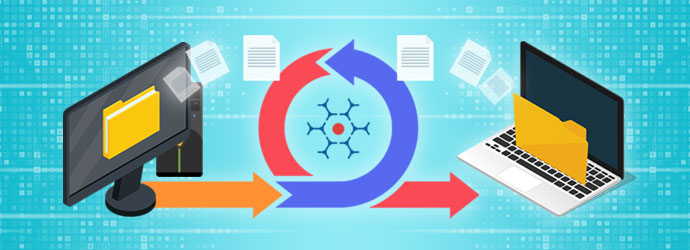
OpsHub Migration Manager, an out-of-box solution from OpsHub, offers two advanced approaches to migrate all data and associated history from legacy systems to Jama Connect without facing the usual challenges such as loss or corruption of critical data, incompatibility of the new system with existing systems in the enterprise, or recreation of compliance & reporting framework.
Given how easily OpsHub Migration Manager facilitates this transition, some of the large enterprises have completely moved their requirements management to Jama Connect. Some enterprises, that have logistical limitations (such as a customer/vendor still using the legacy system) have retained limited licenses of the legacy system and integrated the existing system with Jama Connect, which acts as their primary requirement management system.
In either of the cases, OpsHub Migration Manager ensures that all data is successfully available in Jama Connect with complete history and context and the enterprise can leverage the modern requirement management features of Jama Connect across its ecosystem.
With OpsHub Migration Manager providing hassle-free complete as well as partial migration to Jama Connect, enterprises now have no reason to work with outdated legacy systems that are a roadblock in their journey towards modern system engineering.
Reference: PMI. (August 2014). Requirements Management: A Core Competency for Project and Program Success. PMI.