The Coming Divide in Defense: Federation or Fallout Under DoDI 5000.97
Share: The defense industry is entering a pivotal phase of transformation. With the release of DoDI 5000.97, the U.S. Department of Defense (DoD) has made


No-code integration platform for rich bi-directional sync

Zero downtime migration to tool of your choice
Keep Historical Data, Without Slowing Down Your Tools

Migrate or restructure Azure DevOps

Real-time, context-rich data lake for AI or analytics
By Role
Accelerate delivery with clear insights

Accelerate delivery with clear insights

Transform smarter with a connected digital thread

Confident transitions for every enterprise change
By Initiative

Operational readiness through connected engineering

Modernize and move to cloud without disruption

Build a compliant digital thread for complex environments

Build the foundation for smarter AI
By Domain

No-code integration across teams and systems

Enable collaboration between IT, support, and business teams

Connect PLM & engineering teams for smarter products

Ensure regulatory compliance from start to release

Explore the latest in technology best practices

Success stories from the field
Actionable insights for your business challenges.

See solutions in action

Learn, plan, and execute with confidence

Official announcements and updates

Join discussions that drive results

Stay ahead with curated insights
Share: The defense industry is entering a pivotal phase of transformation. With the release of DoDI 5000.97, the U.S. Department of Defense (DoD) has made
OpsHub Integration Manager
In an Application Lifecycle Management (ALM) environment, the choice of systems, and the collaboration between the cross-functional teams play a great role in delivering quality solutions. While the choice of systems impacts the productivity of a team, the cross-functional collaboration helps the teams get complete context of the business requirements. Best-of-breed systems such as Helix ALM and Azure DevOps Server (TFS) bring rich functionalities to the ecosystem.
By integrating Helix ALM and Azure DevOps Server (TFS), the development teams will have real-time visibility into the test cases, QA schedule, and test results, and the quality control team will have access to complete context of the user story as well as any change/enhancement to it. When these two teams collaborate seamlessly, the overall collaboration in the ecosystem increases and enterprises deliver better quality products to customers at a faster pace.
Access to QA plans and defects in real time
Real-time updates on the status of a story, its estimated time of delivery, and any risks that might delay the impending release
Complete context of the customer requirement and visibility into codes written by the development team & test cases written by QA team
Coordinate on the delivery timelines seamlessly with concurrent updates on changes
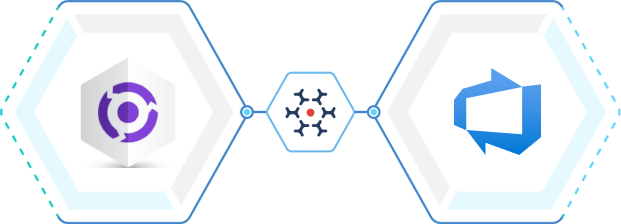
OpsHub Integration Manager integrates Helix ALM and Azure DevOps Server (TFS) bidirectionally. It ensures that all historical and current data is available to each user, in that user’s preferred system, with full context, in real-time. All ‘user stories’ Azure DevOps Server (TFS) automatically synchronize to Helix ALM and all the defects associated with the ‘story’ synchronize back to Azure DevOps Server (TFS).
The development and quality control team start work on adding a new feature to an existing application. The customer changes some requirements once the work has already begun. The Product Manager updates the ‘requirement’ in the development system. The development team incorporates the changes in the user story, but the quality control remains unaware about the change until development team sends the user story for testing.
When the Azure DevOps Server (TFS) and Helix TCM (test module in Helix ALM) are integrated, there will be no need of manual communication between the two teams. Any changes made to one system will reflect in both the systems.