The Coming Divide in Defense: Federation or Fallout Under DoDI 5000.97
Share: The defense industry is entering a pivotal phase of transformation. With the release of DoDI 5000.97, the U.S. Department of Defense (DoD) has made


No-code integration platform for rich bi-directional sync

Zero downtime migration to tool of your choice
Keep Historical Data, Without Slowing Down Your Tools

Migrate or restructure Azure DevOps

Real-time, context-rich data lake for AI or analytics
By Role
Accelerate delivery with clear insights

Accelerate delivery with clear insights

Transform smarter with a connected digital thread

Confident transitions for every enterprise change
By Initiative

Operational readiness through connected engineering

Modernize and move to cloud without disruption

Build a compliant digital thread for complex environments

Build the foundation for smarter AI
By Domain

No-code integration across teams and systems

Enable collaboration between IT, support, and business teams

Connect PLM & engineering teams for smarter products

Ensure regulatory compliance from start to release

Explore the latest in technology best practices

Success stories from the field

Actionable insights for your business challenges.

See solutions in action

Learn, plan, and execute with confidence

Official announcements and updates

Join discussions that drive results

Stay ahead with curated insights

Share: The defense industry is entering a pivotal phase of transformation. With the release of DoDI 5000.97, the U.S. Department of Defense (DoD) has made
OpsHub Integration Manager
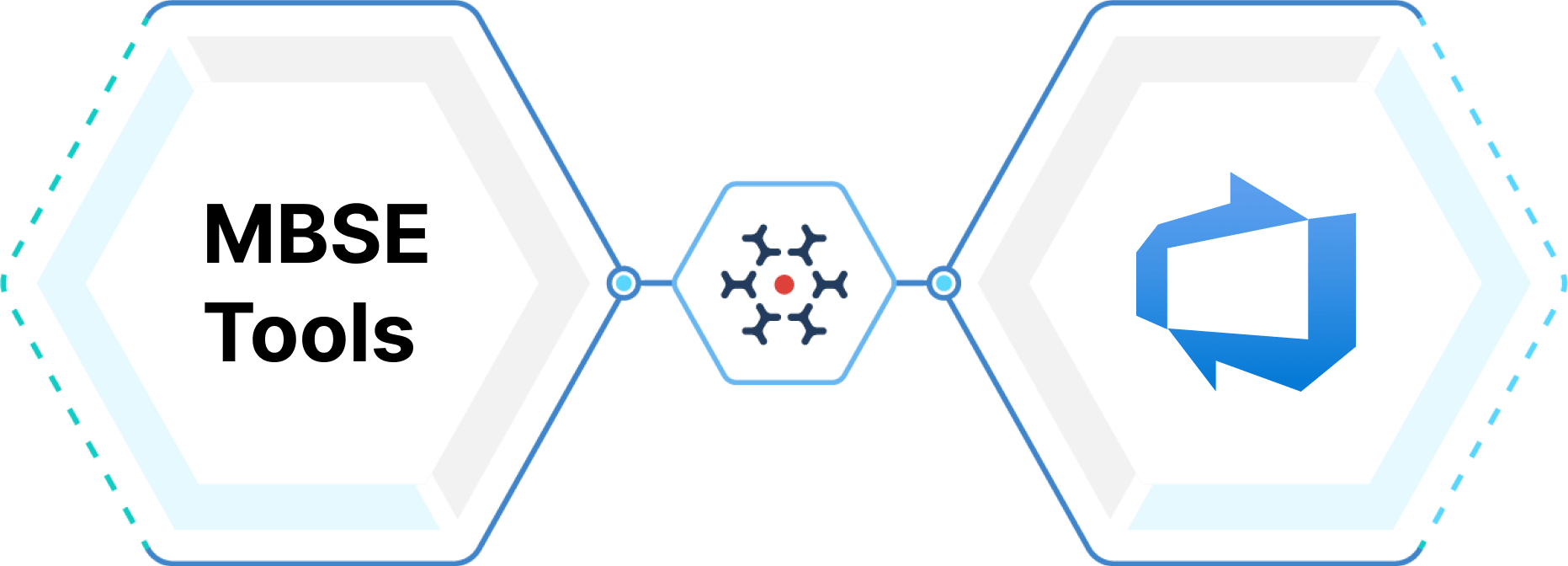
Sync Model Based System Engineering (MBSE) tools like IBM Rhapsody, Capella, or Cameo, by using custom developed connectors with Azure DevOps, so architects and developers stay aligned. Design decisions flow to development. Implementation updates flow back. No manual handoffs, no lost context.
Request a demo
System design doesn’t end with modeling tools. Architectural decisions made in IBM Rhapsody, Capella, or Cameo need to translate into development work in Azure DevOps, but that’s where things usually break down. Design details get summarized, dependencies don’t carry over, and status updates require constant back-and-forth. Architects lose visibility into what’s being built; developers work with incomplete specifications, and delivery takes longer than it should.
OpsHub Integration Manager (OIM) bridges that gap with near real-time, bi-directional synchronization between MBSE tools by using custom developed connectors and Azure DevOps. Model elements flow into Azure DevOps with complete technical context, while implementation progress, blockers, and completion status sync back automatically. Both teams stay in their preferred tools but work from the same continuously updated information. Communication is clearer, and delivery stays aligned with design intent.
Trusted by the world’s leading enterprises


Architects never stop modeling
OpsHub operates entirely outside MBSE tools, no installations, no sync buttons, no waiting. Architects continue their normal design work while synchronization happens automatically in the background. Even large models with thousands of elements maintain full tool performance because integration runs on separate infrastructure.
Complete design context moves with every change
Model hierarchies, component relationships, design dependencies, and technical attachments all transfer without loss. Development teams start with the full engineering blueprint, no missing details, no clarification delays, no uncertainty about how system components interconnect, or what constraints apply.
One Clean Commit Instead of Integration Clutter
OpsHub batches related changes into a single organized commit rather than creating dozens of incremental commits. Model version history remains readable and audit-ready, clearly showing deliberate engineering decisions instead of being obscured by integration artifacts.
OpsHub Integration Manager is an enterprise-grade integration platform that connects MBSE tools by using custom developed connectors and Azure DevOps in near real time. Customers simply define the transformation rules and API calls, while OpsHub handles synchronization, data flow, and system coordination. It goes beyond basic field mapping by preserving complete architectural and implementation context across both systems.
MBSE to Azure DevOps: Model elements, component blocks, packages, including hierarchies, relationships, dependencies, descriptions, attachments, and custom properties.
Azure DevOps to MBSE: Work item status, sprint assignments, developer comments, implementation notes, blockers, and completion details that keep architects informed.
All updates flow bi-directionally and in near real-time, maintaining links between design elements and development work, so both teams always see the full, current picture.
Unlike plugins, OpsHub runs externally using secure APIs, eliminating performance impact on modeling tools, admin overhead, and breakage during upgrades. It adapts easily to custom model types, evolving workflows, and multiple Azure DevOps projects without forcing teams to change how they work.
The outcome: Design handoffs arrive in Azure DevOps with a complete technical context. Implementation updates flow back automatically. Both teams work faster, with fewer interruptions and no loss of traceability.
Problem Statement
Goal
Keep architecture and development teams aligned through automated information exchange between MBSE tools by using custom developed connectors and Azure DevOps.
Business value provided
Better Resource
Utilization
Increase in Customer Satisfaction
0%Growth in SLA Turnaround Time
0%