The Coming Divide in Defense: Federation or Fallout Under DoDI 5000.97
Share: The defense industry is entering a pivotal phase of transformation. With the release of DoDI 5000.97, the U.S. Department of Defense (DoD) has made


No-code integration platform for rich bi-directional sync

Zero downtime migration to tool of your choice
Keep Historical Data, Without Slowing Down Your Tools

Migrate or restructure Azure DevOps

Real-time, context-rich data lake for AI or analytics
By Role
Accelerate delivery with clear insights

Accelerate delivery with clear insights

Transform smarter with a connected digital thread

Confident transitions for every enterprise change
By Initiative

Operational readiness through connected engineering

Modernize and move to cloud without disruption

Build a compliant digital thread for complex environments

Build the foundation for smarter AI
By Domain

No-code integration across teams and systems

Enable collaboration between IT, support, and business teams

Connect PLM & engineering teams for smarter products

Ensure regulatory compliance from start to release

Explore the latest in technology best practices

Success stories from the field
Actionable insights for your business challenges.

See solutions in action

Learn, plan, and execute with confidence

Official announcements and updates

Join discussions that drive results

Stay ahead with curated insights

Share: The defense industry is entering a pivotal phase of transformation. With the release of DoDI 5000.97, the U.S. Department of Defense (DoD) has made
OpsHub Integration Manager
Request a demo
Azure DevOps (Server / Cloud) manages the execution layer of software delivery. Teams track work items, plan iterations, manage defects, and monitor progress directly inside Azure DevOps. At the same time, organizations rely on Snowflake as a central platform for enterprise analytics, reporting, and data-driven decision making.
Without integration, Azure DevOps delivery data often remains isolated from enterprise data platforms. Teams rely on manual exports, scripts, or delayed ETL pipelines to move work-item data into analytics systems. This results in outdated reports, inconsistent metrics, and limited visibility into engineering performance.
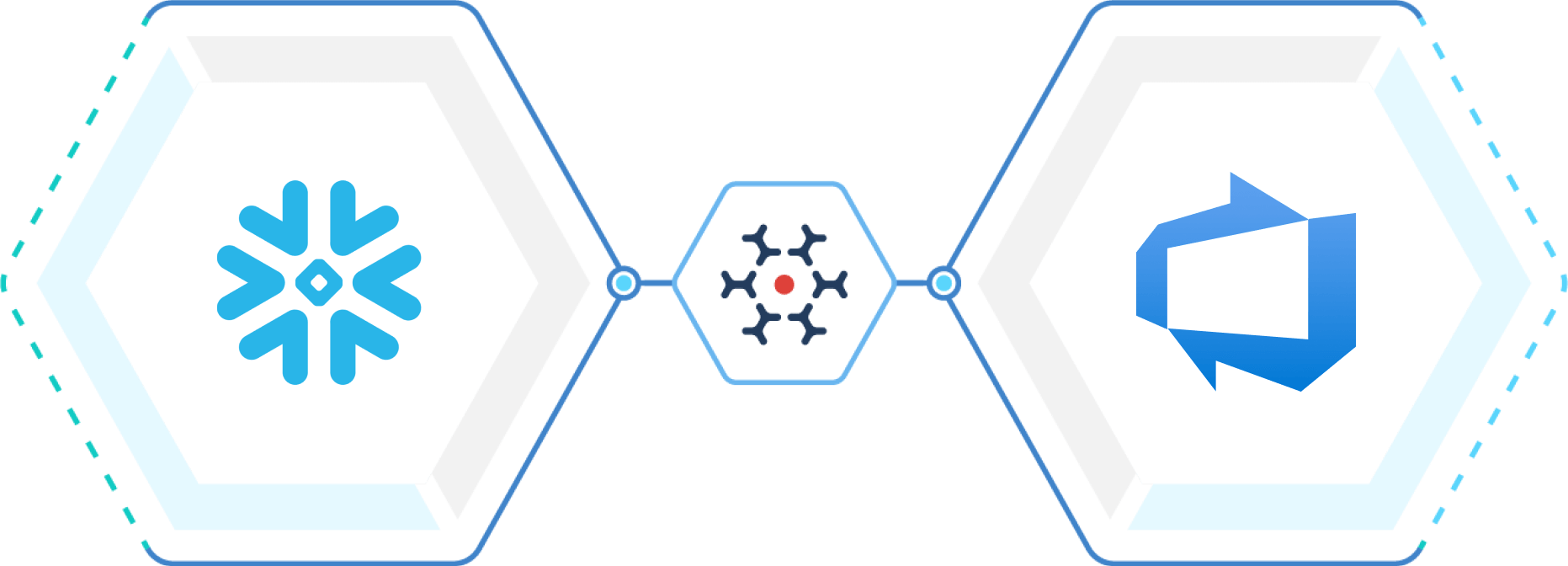
OpsHub Integration Manager bridges this gap by enabling secure, bidirectional synchronization between Snowflake and Azure DevOps. Delivery data becomes instantly available for enterprise analytics, while insights generated in Snowflake can be pushed back into Azure DevOps to support faster, data-informed engineering decisions.

Trusted by the world’s leading enterprises


Integration that fits your workflow
No process disruption. No analytics pipeline rewrites. Whether you’re syncing thousands or millions of Azure DevOps work items, OpsHub reliably moves engineering data into Snowflake; preserving structure, history, and meaning without changing how teams work.
Secure, scalable, zero-plugin setup
OIM runs outside ADO and Snowflake using secure APIs. No in-tool plugins. No performance drags. No dependency on fragile scripts that break during upgrades.
Rich data sync that stays analysis-ready
Preserve context, not just rows. Keep status meaning, ownership, links, and history aligned so analytics in Snowflake reflects how work truly moved.
OpsHub Integration Manager connects Azure DevOps engineering activity with Snowflake’s enterprise data platform, enabling organizations to transform delivery execution data into real-time analytics and decision intelligence.
Azure DevOps to Snowflake:
Work items (Epics, features, user stories, bugs, tasks), sprint data, area paths, iteration paths, pipeline signals, ownership, state transitions, comments, attachments, and change history are streamed into structured Snowflake tables. This creates a reliable engineering data foundation for analytics, reporting, and AI models.
Snowflake to Azure DevOps (optional):
Analytical insights generated in Snowflake such as delivery risk indicators, SLA breaches, release readiness signals, or quality alerts can be written back into Azure DevOps work items through tags, comments, custom fields, or workflow triggers.

OpsHub Integration Manager acts as the orchestration layer between Azure DevOps delivery systems and Snowflake’s enterprise analytics environment. It structures engineering data into normalized datasets that Snowflake can immediately use for BI dashboards, portfolio reporting, predictive analytics, and AI-driven insights.
The integration operates through secure API-based connectivity and runs externally to both platforms, ensuring that neither Azure DevOps pipelines nor Snowflake workloads experience performance impact.
With configurable mappings, filters, and transformation rules, OIM ensures Snowflake receives clean, analysis-ready engineering telemetry while development teams continue working inside Azure DevOps without process disruption.
How to integrate Snowflake and Azure DevOps using OIM
Step
Connect Azure DevOps and Snowflake securely using API-based authentication.
Step
Select Azure DevOps projects, work item types, and the Snowflake tables or schemas where engineering data will be stored.
Step
Map fields and configure sync logic, including filters, transformations, and update rules.
Step
Activate synchronization and monitor sync status, throughput, and any failures through the OIM dashboard.
Problem Statement
Engineering execution happens in Azure DevOps while enterprise analytics and reporting platforms operate in Snowflake. Without integration, teams rely on scripts, exports, or delayed ETL pipelines, leading to inconsistent delivery metrics and limited visibility across engineering and business data.
Goal:
Create a continuous data pipeline from Azure DevOps into Snowflake, so engineering execution data becomes immediately usable for enterprise analytics, while optionally feeding analytical insights back into development workflows.
Business value provided
Better Resource
Utilization
Increase in Customer Satisfaction
0%Growth in SLA Turnaround Time
0%