The Coming Divide in Defense: Federation or Fallout Under DoDI 5000.97
Share: The defense industry is entering a pivotal phase of transformation. With the release of DoDI 5000.97, the U.S. Department of Defense (DoD) has made

No-code integration platform for rich bi-directional sync

Zero downtime migration to tool of your choice
Keep Historical Data, Without Slowing Down Your Tools
Migrate or restructure Azure DevOps

Real-time, context-rich data lake for AI or analytics
By Role
Accelerate delivery with clear insights

Accelerate delivery with clear insights

Transform smarter with a connected digital thread

Confident transitions for every enterprise change
By Initiative

Operational readiness through connected engineering

Modernize and move to cloud without disruption

Build a compliant digital thread for complex environments

Build the foundation for smarter AI
By Domain

No-code integration across teams and systems

Enable collaboration between IT, support, and business teams

Connect PLM & engineering teams for smarter products

Ensure regulatory compliance from start to release

Explore the latest in technology best practices

Success stories from the field
Actionable insights for your business challenges.

See solutions in action

Learn, plan, and execute with confidence

Official announcements and updates
Join discussions that drive results
Stay ahead with curated insights
Share: The defense industry is entering a pivotal phase of transformation. With the release of DoDI 5000.97, the U.S. Department of Defense (DoD) has made
OpsHub Integration Manager
Create a governed digital thread between Windchill PLM and Azure DevOps with near real-time, two-way synchronization.
Remove duplicate effort, maintain lifecycle accuracy, and gain complete visibility from product change initiation through confirmed release.
Request a Demo
Product change objects often originate in Windchill PLM while implementation work happens in Azure DevOps Boards and Repos. Without integration, structured product data becomes simplified text; lifecycle states drift apart, and traceability between change intent and software execution weakens.

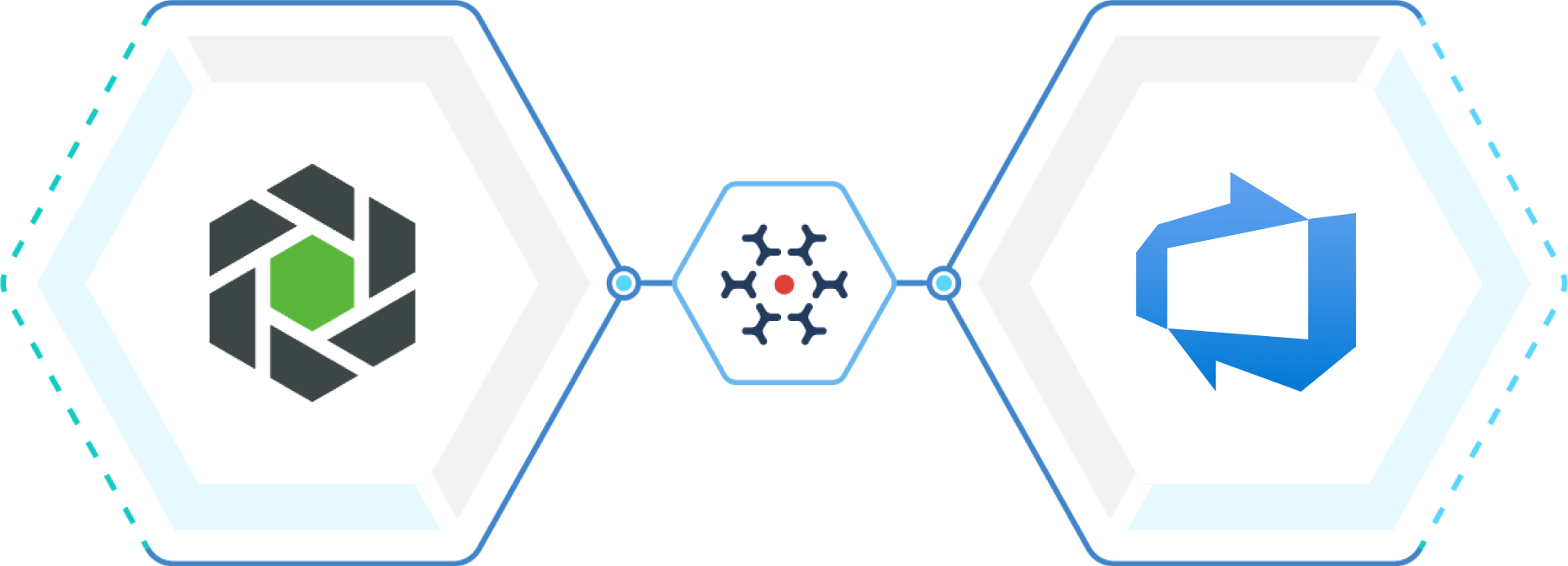
The impact: delayed change validation, manual reconciliation, audit gaps, and limited program-level visibility. In short, when engineering and development operate in separate systems, the product pays the price.
OpsHub Integration Manager (OIM) enables near real-time, bi-directional synchronization between Windchill PLM and Azure DevOps. Change requests, Change notices, Problem reports, requirements, attachments, and lifecycle updates remain aligned automatically.
Engineering and software teams continue working in their native systems—while leadership gains a unified, traceable execution view.
Trusted by the world’s leading enterprises


Integration That Fits Your Workflow
No process changes. No team disruption. Whether you’re syncing 50 tickets or 5 million, OpsHub supports multi-instance, custom fields, and high-volume Windchill PLM-Azure DevOps environments—without forcing you into rigid templates.
Secure, Scalable, Zero-Plugin Setup
Configure everything in clicks, not code. Deploy and manage syncs through an intuitive UI or API no scripts, no admin-level installs in Azure DevOps or Windchill PLM. The integration doesn’t break during upgrades, doesn’t require reinstallation or reconfiguration, and automatically resumes from where it left off once the system is back online.
The Richest Sync Experience Available
OpsHub Integration Manager bridges product engineering in Windchill PDMLink with execution tracking in Azure DevOps. Change objects, requirements, affected parts, and lifecycle transitions remain aligned with work item states, sprint progress, and release validation—maintaining an end-to-end, system-aware digital thread.
Windchill PLM → Azure DevOps:
Issues (Soft-type subtypes of Problem Reports), requirements, affected objects, attributes, lifecycle state transitions, attachments, and links are —synchronized with complete product context intact.
Azure DevOps → Windchill PLM:
Work item status, development tasks and subtasks, assignee updates, comments, attachments, links, build or implementation details, and resolution information—, keeping product teams aligned with real delivery progress.
Every change made in either system is instantly visible in the other with two-way sync. Hence, no delays, manual triggers, and zero data loss. Engineering and software teams stop operating in silos and start working from one continuously updated, traceable record of truth.
OpsHub lives outside both platforms entirely. It connects through secure APIs, leaving Windchill and Azure DevOps untouched — no plugins, no admin exposure, no breakage when either system upgrades. Custom lifecycle workflows, attribute extensions, and multi-project Azure DevOps structures are handled natively, on your terms.
Outcome: Engineering or design changes land in Azure DevOps complete and not stripped down. Delivery progress surfaces in Windchill PLM without anyone asking for it. Teams stop chasing status and start executing — with compliance and traceability built in, not bolted on.
5 Easy Steps to Integrate
Step
Set up connection to Windchill PLM and Azure DevOps.
Step
Select projects and entities to be synchronized.
Step
Define the sync direction and map fields across both systems.
Step
Activate the sync and monitor real-time performance via OIM’s dashboard.
Problem Statement
Engineering changes approved in Windchill PLM sit in inboxes before anyone creates a Work Item. Developers build against incomplete descriptions because the structured PLM context never made the journey. Lifecycle states in Windchill drift from what is actually happening in Azure DevOps sprints. When an auditor asks for a traceability report, teams spend days reconstructing what should have been connected all along.
The cost is real-delayed releases, compliance exposure, and engineering effort burned on coordination instead of execution.
Goal:
Automated, bi-directional data exchange to keep product engineering and software development in lockstep from change initiation to verified delivery.
Product teams gain visibility from change initiation to implementation closure. Development teams never leave their native environment. Stakeholders get an auditable, end-to-end execution record — with no duplicate entry, no status chasing, and no traceability gaps.
Business value provided
Better Resource
Utilization
Increase in Customer Satisfaction
0%Growth in SLA Turnaround Time
0%